
Math Courses Stanford
Math Courses Stanford - Students majoring in mathematics have a wide range of eventual interests: Math 51 has an active learning structure; Established in 2006, the sterling award is one of stanford’s most selective honors. You’ll learn to create, analyze, and interpret mathematical models and to communicate sound arguments based on mathematical reasoning and careful data analysis. The course of study should, if feasible, give the student the opportunity and responsibility of doing original, creative work in the major subject. Math 19, 20, and 21 present single variable calculus. Here is an overview of the math courses taken by most students interested in engineering majors at stanford. The undergraduate program in mathematics aims to provide students with a broad understanding of mathematics encompassing logical reasoning, generalization, abstraction, and formal proof. Students formulate conjectures and hypotheses; It is named after president j.e. Linear algebra in large dimensions. The course of study should, if feasible, give the student the opportunity and responsibility of doing original, creative work in the major subject. The mathematics degree prepares students for careers in the corporate sector, tech industry, government agencies, and for graduate programs in mathematics. It is named after president j.e. Established in 2006, the sterling award is one of stanford’s most selective honors. You must have taken the math placement. Students majoring in mathematics have a wide range of eventual interests: The undergraduate program in mathematics aims to provide students with a broad understanding of mathematics encompassing logical reasoning, generalization, abstraction, and formal proof. Periodic trigonometric functions, advanced algebra, and analysis of elementary functions (including exponentials and logarithms). Benefits of the major program are greatest when it. Students majoring in mathematics have a wide range of eventual interests: The course of study should, if feasible, give the student the opportunity and responsibility of doing original, creative work in the major subject. Learn more about mathematics in the stanford bulletin. Why are the mathematical facts learned in school true? You must have taken the math placement. Wallace sterling, who served as the university’s president from. Established in 2006, the sterling award is one of stanford’s most selective honors. Mathematics of knots, braids, links, and tangles. Math 19, 20, and 21 present single variable calculus. Students formulate conjectures and hypotheses; Mathematics of knots, braids, links, and tangles. Here is an overview of the math courses taken by most students interested in engineering majors at stanford. Established in 2006, the sterling award is one of stanford’s most selective honors. Wallace sterling, who served as the university’s president from. The course of study should, if feasible, give the student the opportunity and. Why are the mathematical facts learned in school true? Mathematics of knots, braids, links, and tangles. Here is an overview of the math courses taken by most students interested in engineering majors at stanford. Benefits of the major program are greatest when it. You’ll learn to create, analyze, and interpret mathematical models and to communicate sound arguments based on mathematical. The undergraduate program in mathematics aims to provide students with a broad understanding of mathematics encompassing logical reasoning, generalization, abstraction, and formal proof. Students majoring in mathematics have a wide range of eventual interests: Linear algebra in large dimensions. You’ll learn to create, analyze, and interpret mathematical models and to communicate sound arguments based on mathematical reasoning and careful data. The mathematics degree prepares students for careers in the corporate sector, tech industry, government agencies, and for graduate programs in mathematics. Learn more about mathematics in the stanford bulletin. Math 51 has an active learning structure; Math 19, 20, and 21 present single variable calculus. The undergraduate program in mathematics aims to provide students with a broad understanding of mathematics. The course of study should, if feasible, give the student the opportunity and responsibility of doing original, creative work in the major subject. The undergraduate program in mathematics aims to provide students with a broad understanding of mathematics encompassing logical reasoning, generalization, abstraction, and formal proof. Students formulate conjectures and hypotheses; You’ll learn to create, analyze, and interpret mathematical models. The department of mathematics offers programs leading to the degrees of bachelor of science, master of science, and doctor of philosophy in mathematics, and also participates in the. Mathematics of knots, braids, links, and tangles. Some go into academia, a finance, cryptography, the tech industry, and more. Students formulate conjectures and hypotheses; Established in 2006, the sterling award is one. Mathematics of knots, braids, links, and tangles. It is named after president j.e. Math 19, 20, and 21 present single variable calculus. Learn more about mathematics in the stanford bulletin. Linear algebra in large dimensions. Why are the mathematical facts learned in school true? The course of study should, if feasible, give the student the opportunity and responsibility of doing original, creative work in the major subject. Students majoring in mathematics have a wide range of eventual interests: Math 19, 20, and 21 present single variable calculus. Students formulate conjectures and hypotheses; Wallace sterling, who served as the university’s president from. Math 51 has an active learning structure; Benefits of the major program are greatest when it. You must have taken the math placement. You’ll learn to create, analyze, and interpret mathematical models and to communicate sound arguments based on mathematical reasoning and careful data analysis. Established in 2006, the sterling award is one of stanford’s most selective honors. Some go into academia, a finance, cryptography, the tech industry, and more. Here is an overview of the math courses taken by most students interested in engineering majors at stanford. Students formulate conjectures and hypotheses; The course of study should, if feasible, give the student the opportunity and responsibility of doing original, creative work in the major subject. The undergraduate program in mathematics aims to provide students with a broad understanding of mathematics encompassing logical reasoning, generalization, abstraction, and formal proof. Why are the mathematical facts learned in school true? The directed reading program is a program of stanford's graduate mathematics outreach organization in which undergraduate students (of any major) interested in independently. Students majoring in mathematics have a wide range of eventual interests: The mathematics degree prepares students for careers in the corporate sector, tech industry, government agencies, and for graduate programs in mathematics. Periodic trigonometric functions, advanced algebra, and analysis of elementary functions (including exponentials and logarithms).
The Stanford Mathematics Problem Book With Hints and Solutions
Our 10 Favorite Stanford Free Online Courses EStudent

Stanford Math Tournament (Solution link in comment box) r/mathematics
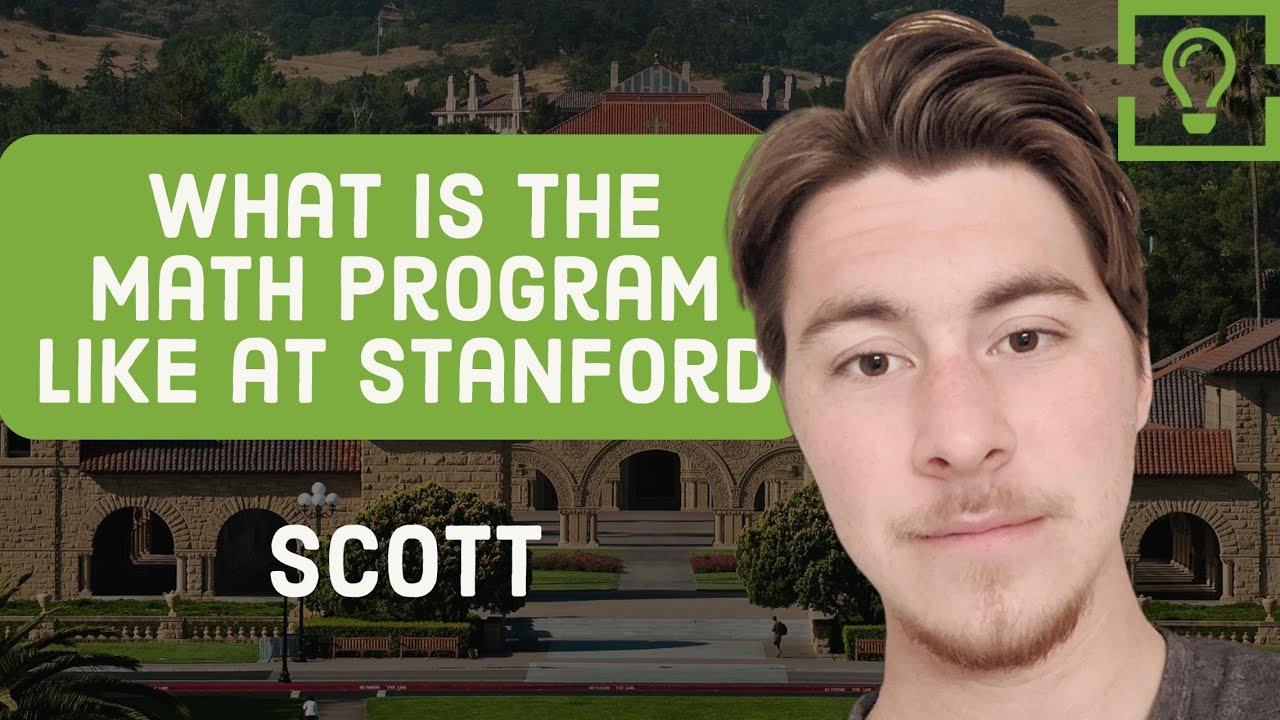
Stanford Student Answers What is the Math Program Like at Stanford

MATH 19 at STANFORD Free Study Help

Stanford math tournament algebra tiebreaker YouTube
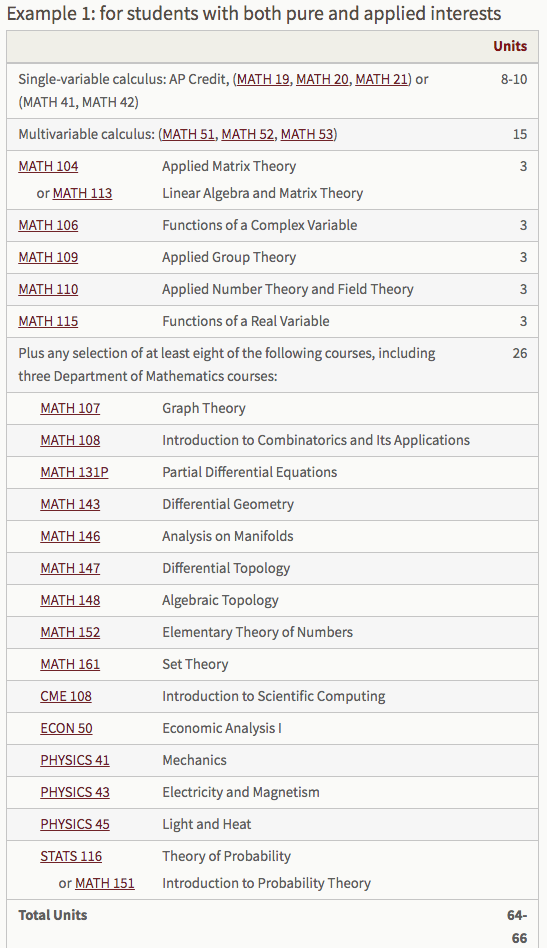
Undergraduate Math Degree Courses

Stanford University Mathematical and Computational Science YouTube

Stanford University Mathematics Camp (SUMaC)

Stanford University Mathematics Camp (SUMaC) 6 Great Reasons to Apply
Learn More About Mathematics In The Stanford Bulletin.
Math 19, 20, And 21 Present Single Variable Calculus.
Linear Algebra In Large Dimensions.
Mathematics Of Knots, Braids, Links, And Tangles.
Related Post: